It asks.
The agent proposes a plan, then lands a question in the chat box with its choices, then asks before it pushes.
 The coding app by Droppy
Droppy Code drives Codex, Claude, Cursor, OpenCode, Grok, Antigravity, DeepSeek and Meta from one Liquid Glass window. Streaming replies, inline approvals, a diff for every turn and a terminal per thread. On your own subscriptions. Free and open source.
Made by the people behind Droppy for Mac
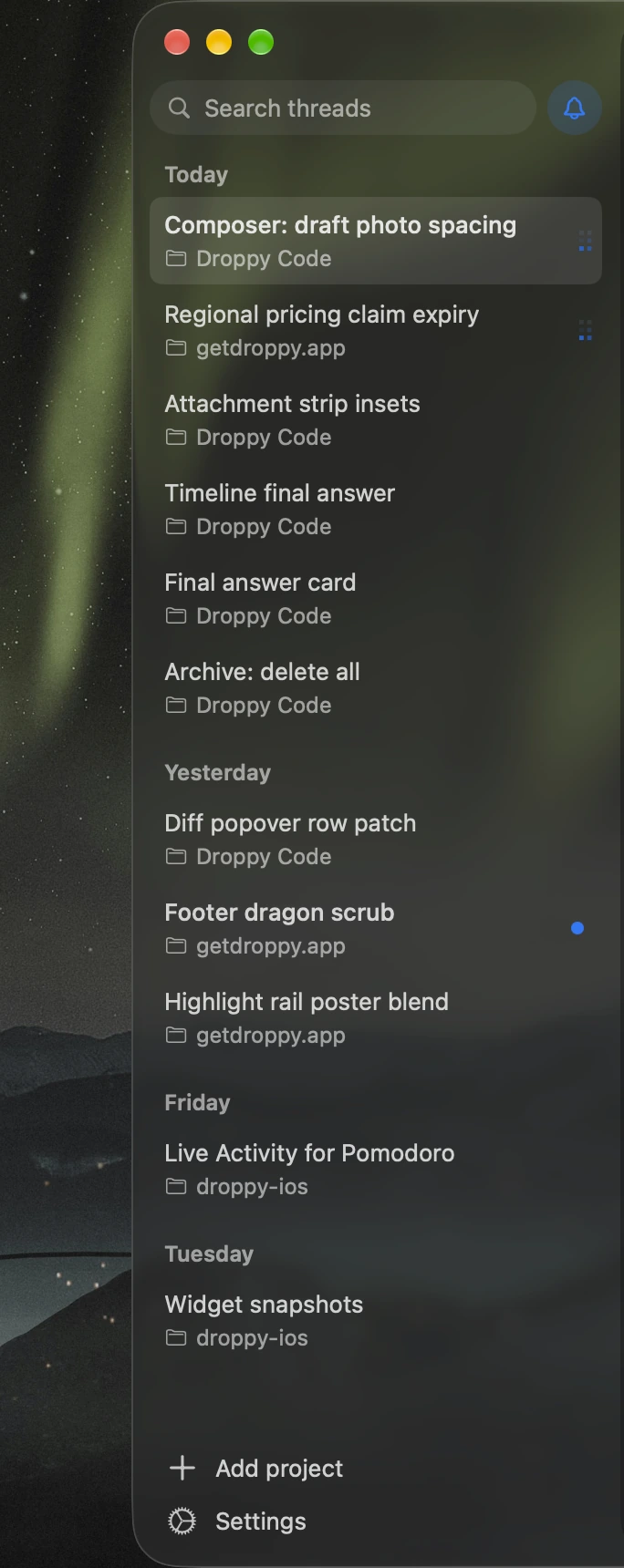
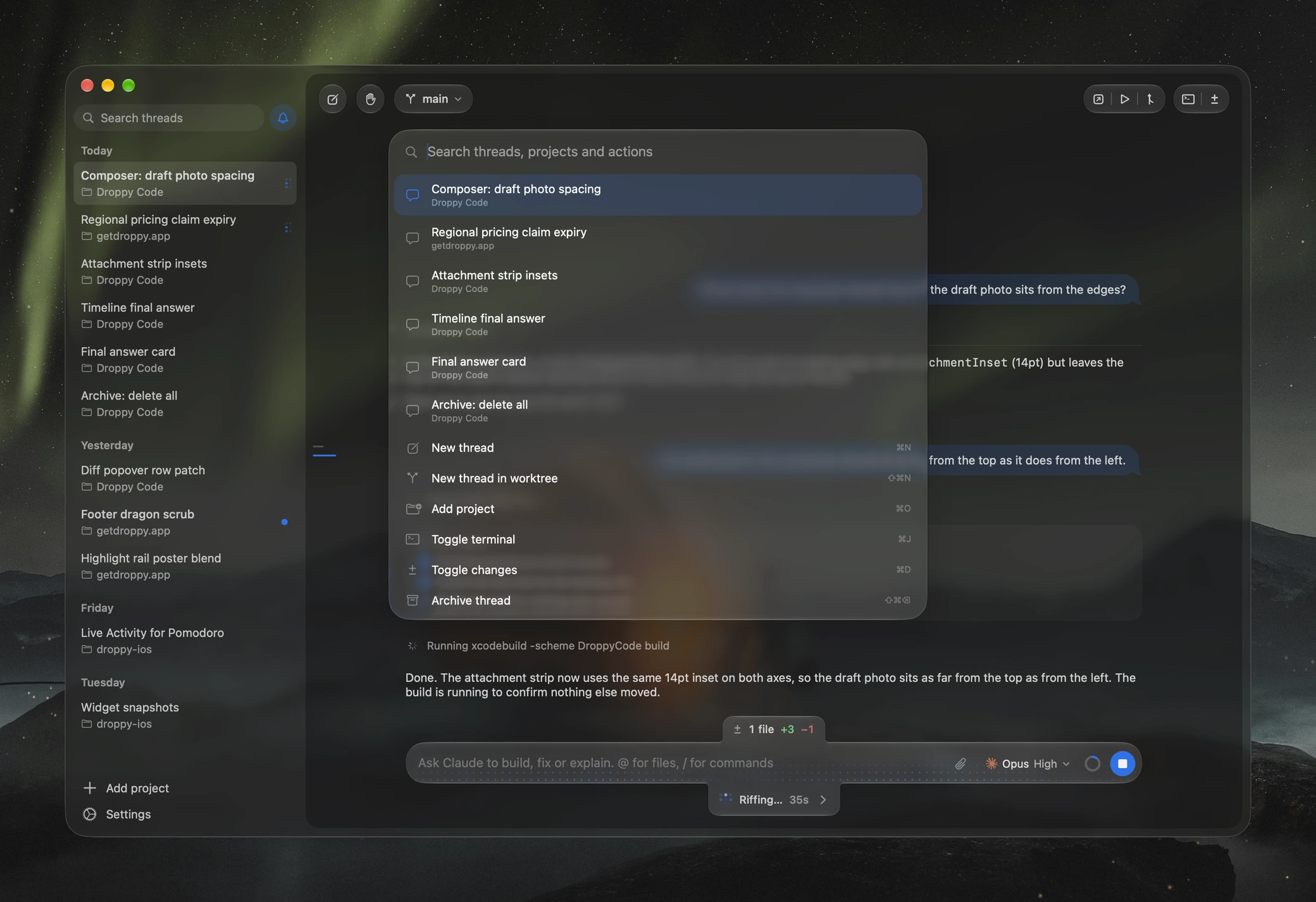
The real app, mid-work: asking, queueing, reviewing, and the palette.
The agent proposes a plan, then lands a question in the chat box with its choices, then asks before it pushes.
Type while it works. Follow-ups line up above the chat box and go out one after another when the turn ends.
Each reply is captured as a checkpoint. Read the change in place, revert the turn, or rewind the whole thread.
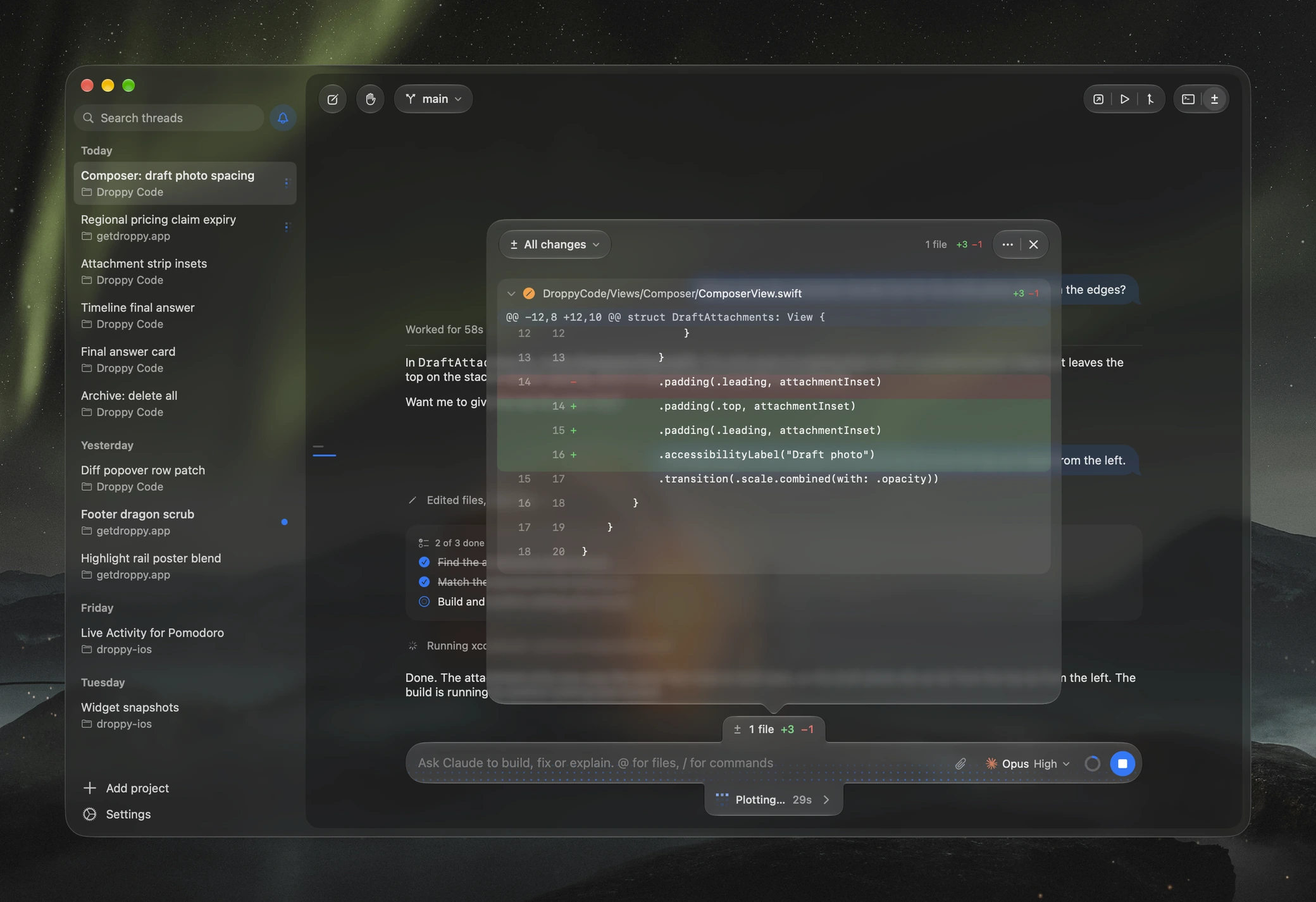
Threads, projects and every command, from ⌘K, over whatever you were doing.
Droppy Code runs the command line tools you already have installed and signed in, on the subscriptions you already pay for. No keys to paste, no middleman, no markup.
Sign in once in your terminal, for example codex login or claude auth login, and Droppy Code picks it up.
Everything your agent does, live.
Plan mode, model and reasoning selection, and four permission modes per thread. Approvals and questions answered inline, in the timeline where they happen.
Make it yours. Twenty-six tinted-glass themes, from System to Catppuccin, Dracula, Claude and Codex.
Which one are you going to pick?
Projects, threads, git and the little things, all in one window that feels like it shipped with the Mac.
The effort slider under the model chip. Maximum lights the track in the provider's colour, and fast mode fuses in.
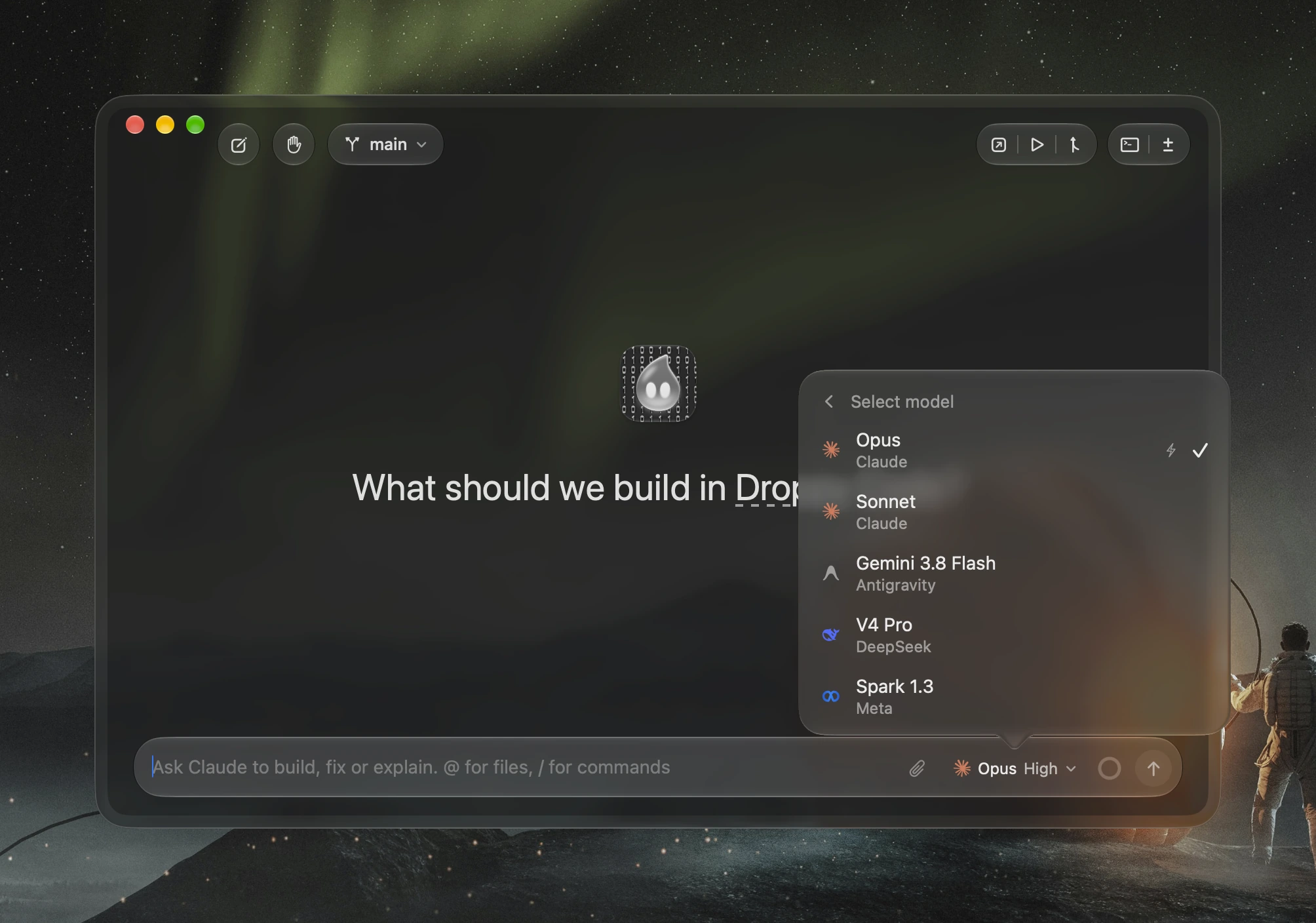
Any model from any provider, from the same chip.
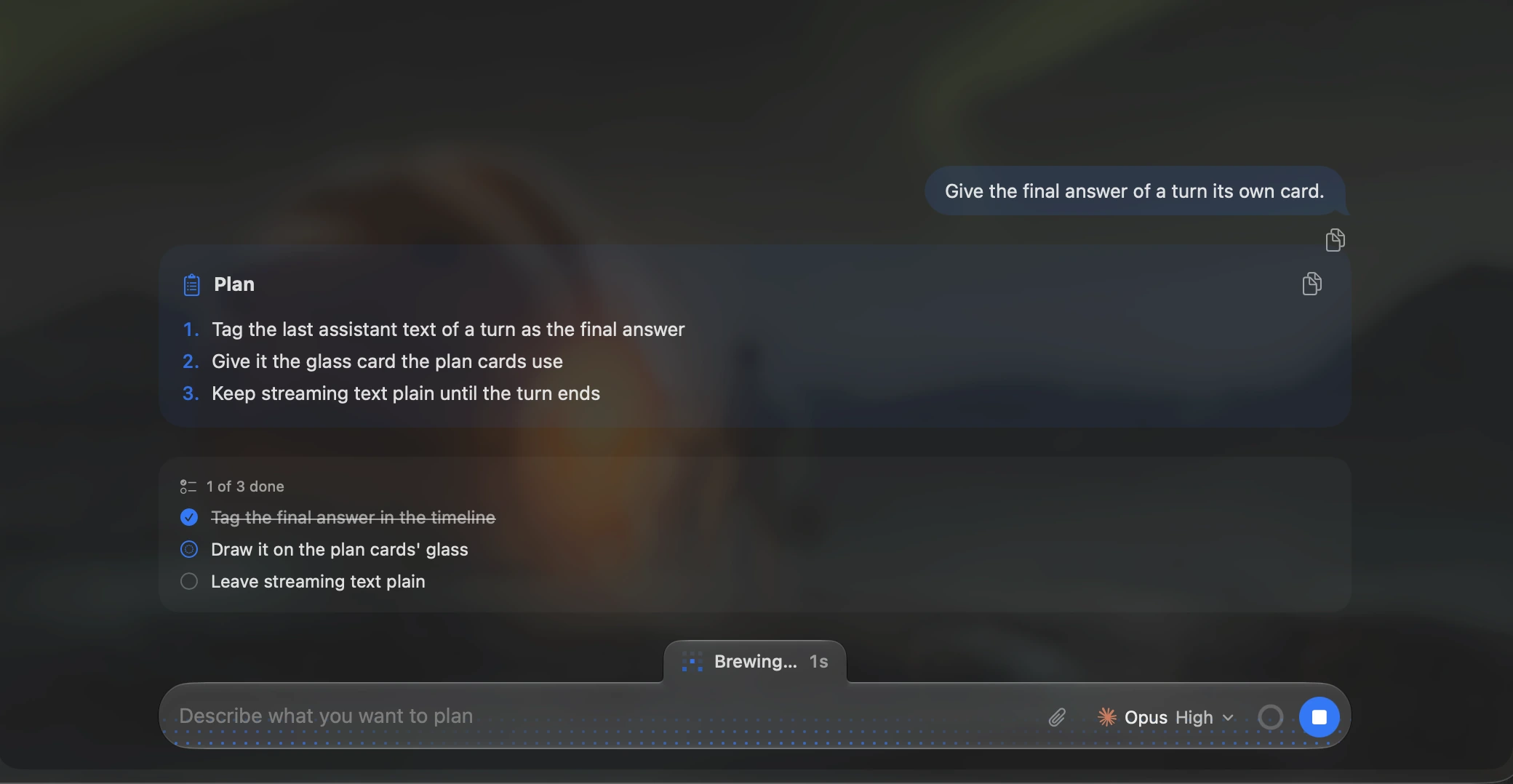
Plans wait for your approval and to-do lists tick themselves off as the agent works.
Switch away, come back when the agent is done or needs you. The thread that wants you is one click.
Written entirely in Swift and SwiftUI with Liquid Glass, for Apple silicon on macOS 26 and later. No web view, no Electron, one dependency.
Droppy Code is a Mac app for the agents on your Mac. Everything that would turn it into a service, an account or a data pipeline is not on the roadmap, and not in the binary.
Droppy Code is free and MIT licensed. It drives the agents you already pay for, so there is nothing to pay for here.
 Droppy Code for macOSVersion 1.0.0 · Signed and notarized
codex login or claude auth logingh or glab for pull requestsDisk image, drag to Applications. Source under the MIT License.
Droppy Code is the coding app by Droppy: a native macOS app that drives the coding agents you already have installed. It gives Codex, Claude, Cursor, OpenCode, Grok, Antigravity, DeepSeek and Meta one shared window with projects, threads, streaming replies, approvals, diffs, git and a terminal. It is made by the same people as Droppy for Mac.
Yes. Droppy Code is free and released under the MIT License. You pay your agent providers as you already do; Droppy Code never sits in between, never proxies a request and never adds a markup.
Not for Codex, Claude, Cursor, OpenCode, Grok or Antigravity: sign in once in your terminal, for example codex login or claude auth login, and Droppy Code uses that session and your subscription. DeepSeek and Meta talk to their APIs directly, so those two take a key, stored in your Keychain.
A Mac with Apple silicon running macOS 26 or later. The app is built on Liquid Glass and ships as an Apple silicon binary only. It is signed with a Developer ID and notarized, so it opens without any Gatekeeper workaround.
Only what your agents send to their own providers. Droppy Code has no telemetry, no analytics, no account and no cloud sync. Remote access, mobile apps and a web client are left out on purpose. Your threads, checkpoints and settings stay on your Mac.
Droppy is the supercharged Dynamic Island for Mac. Droppy Code is its coding sibling, built by the same developer with the same taste for native Mac apps. They are separate apps: you do not need one to use the other, and Droppy Code does not need a Droppy license.
After every turn Droppy Code records a hidden git checkpoint of your project, so each reply comes with a diff and a revert button, and a thread can be rewound to any earlier turn. A new thread can also start in its own git worktree, a separate copy of the repository on its own branch, so several agents can work on one project at the same time without touching each other's files.
Join the Droppy Discord, or email hi@getdroppy.app. Bugs and ideas are welcome there too.

Eight providers, one window, a diff for every turn and a terminal per thread. Free, open source, native.